
Which Savings Account Earns the Least Money?
If your savings account is with one of the large national banks, chances are it’s earning close to nothing. Traditional savings accounts at big brick-and-mortar banks consistently pay the lowest interest rates of any mainstream savings product in the United States, often as low as 0.01% APY. That means a $10,000 balance could earn about one dollar a year while inflation quietly erodes its real value.
This guide breaks down exactly which savings accounts pay the least, why banks get away with it, and what to switch to instead.
The Short Answer: Big-Bank Traditional Savings Accounts Pay the Least
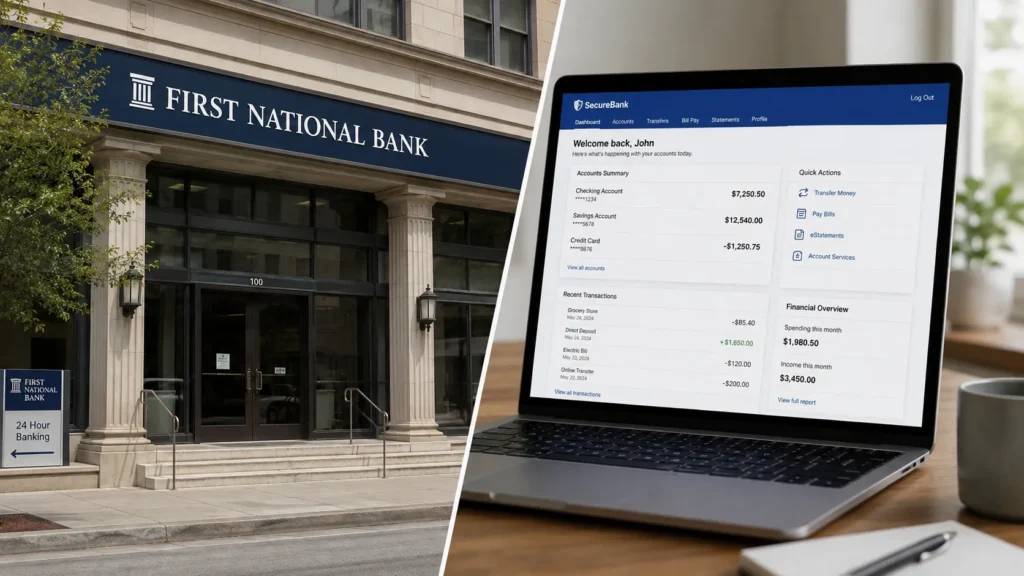
Standard savings accounts from large national retail banks, think Chase, Bank of America, Wells Fargo, and Citibank, are the worst-paying mainstream savings product available today. Most sit between 0.01% and 0.05% APY, regardless of how much you deposit.
Online-only banks, credit unions, and money market accounts routinely pay 10 to 40 times more for holding the same type of deposit. The account structure hasn’t changed. The interest rate has.
Why Big Banks Pay Such Low Interest Rates
1. Overhead Costs Eat Into Your Rate
National banks operate thousands of physical branches, employ large staffs, and maintain extensive ATM networks. Every branch lease, teller salary, and marketing campaign is a cost the bank has to cover somewhere. Paying depositors less interest is one of the easiest ways to offset that overhead.
Online banks skip almost all of this. Without branches or tellers to pay for, they can afford to pass more of their earnings back to customers in the form of higher rates.
2. Inertia Banking: They Count On You Not Switching
Big banks know most customers rarely move their savings once an account is opened. Switching banks feels like a hassle, even when it takes fifteen minutes online. Banks price this inertia into their rates. They don’t need to compete aggressively for deposits from customers who never leave, so the rate stays low year after year.
3. FDIC Insurance Applies Whether You Earn 0.01% or 4%
A common misconception is that low-rate accounts are somehow safer. They aren’t. Any FDIC-member bank insures deposits up to $250,000 per depositor, per account category, regardless of the interest rate offered. A high-yield online savings account at an FDIC-insured bank carries the same government-backed protection as a traditional branch account paying a fraction of the rate.
How the Big Four Banks’ Savings Rates Compare
Rates change over time, but the pattern has held for years. As of 2026, the standard savings accounts at the largest US banks typically pay:
Chase Savings: around 0.01% APY; Bank of America Advantage Savings: around 0.01% APY; Wells Fargo Way2Save: around 0.01% to 0.15% APY depending on balance tier; Citibank Regular Savings: around 0.01% to 0.05% APY, varies by state
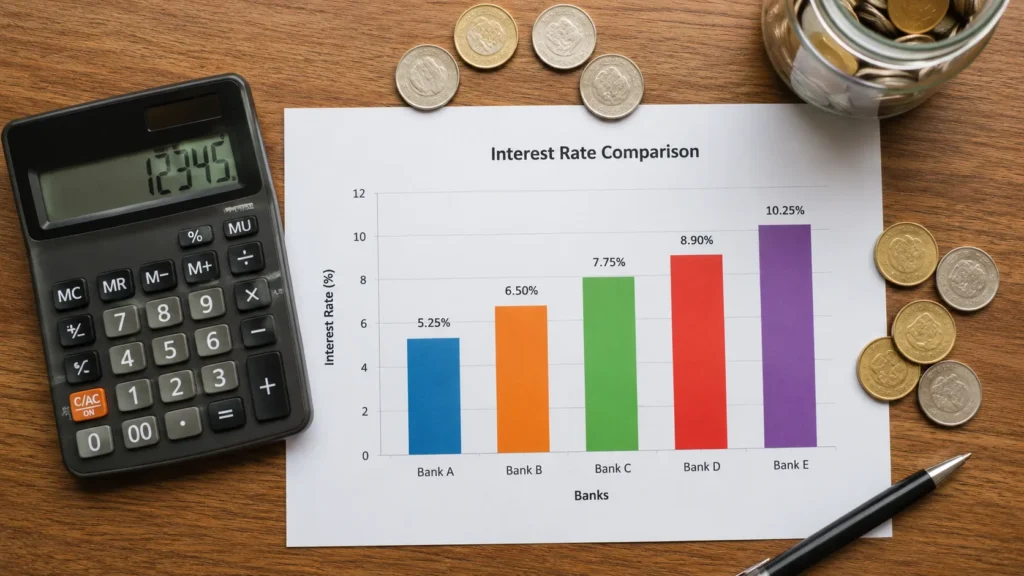
Compare that to the national average for high-yield online savings accounts, which has generally sat between 4% and 5% APY in recent years. The gap isn’t a rounding error. It’s the difference between an account that barely moves and one that meaningfully grows your money.
Other Low-Earning Savings Options to Watch For
1. Basic Savings Accounts Tied to Checking (Relationship Accounts)
Many banks bundle a savings account with a checking account and call it a “relationship” or “linked” savings product. These almost always carry the lowest tier of interest the bank offers. The convenience of automatic transfers between accounts doesn’t translate into a better rate.
2. Passbook Savings Accounts
Passbook accounts, where a physical booklet tracks deposits and withdrawals, are largely a holdover from decades past. They’re still offered by some community banks and tend to pay minimal interest, often below 0.10% APY, while requiring an in-branch visit to update the passbook.
3. Some Credit Union Regular Share Accounts
Credit unions generally outperform big banks on rates, but not always. A basic “share savings” account, the minimum deposit required just to become a member, can pay close to nothing. Credit unions usually reserve their competitive rates for separate high-yield or share certificate products, not the entry-level membership account.
What Actually Pays More: The Alternatives
1. High-Yield Online Savings Accounts
Online savings accounts from banks like Ally, Marcus, Discover, and Capital One 360 consistently rank among the highest-paying, most liquid savings options. Rates move with the Federal Reserve’s benchmark rate, but they’ve stayed well above traditional bank savings rates for years. Most have no minimum balance requirement and no monthly fees. If your bigger problem is leaving the money untouched rather than finding the highest rate, an untouchable savings account may make more sense.
2. Money Market Accounts
Money market accounts function similarly to savings accounts but often pay slightly more, sometimes with check-writing or debit card access included. They’re a reasonable middle ground for people who want a bit more flexibility without locking money away.
3. Certificates of Deposit (CDs)
CDs typically pay more than standard savings accounts in exchange for locking your money up for a fixed term, from a few months to several years. They make sense for money you’re confident you won’t need before the term ends. Withdrawing early usually triggers a penalty that can wipe out several months of earned interest.
4. Cash Management Accounts from Brokerages
Brokerages like Fidelity and Schwab offer cash management accounts that sweep uninvested cash into money market funds, often yielding competitively with high-yield savings accounts. These can be a useful option for people who already keep investment accounts at the same firm and want to consolidate.
How Much Money You’re Actually Losing With a Low-Rate Account
The difference sounds small in percentage terms but adds up fast in dollars. On a $10,000 balance held for one year:
At 0.01% APY, you’d earn about $1. At 4.5% APY, you’d earn about $450.
That’s not a hypothetical spread. It’s the real gap between a typical big-bank savings account and a typical high-yield online account, sitting untouched for twelve months. Over five or ten years, with interest compounding, the difference grows into thousands of dollars for anyone holding a meaningful emergency fund.
When a Low-Yield Savings Account Still Makes Sense
There are a few situations where keeping money in a lower-paying account is a reasonable trade-off rather than a mistake.
If you need frequent in-person branch access, a big bank’s convenience may outweigh the rate difference for a small balance. If you’re parking money for only a few days before a large purchase or transfer, the interest lost is negligible. If a linked checking-savings account helps you avoid overdraft fees through automatic transfers, that protection can be worth more than the missed interest on a modest balance.
For any balance you’re not actively spending down, though, a low-yield account is rarely the right long-term home.
How to Check If Your Savings Account Is Underperforming
Log into your account and find the current APY, usually listed in your account details or most recent statement. Compare it against the national average for high-yield savings accounts, which financial publications and comparison sites update regularly.
If your rate is below 1%, you’re very likely holding a low-earning account, and money is being left on the table every month it stays there.
How to Switch to a Better-Paying Account
Moving to a higher-yield account is usually simple. Open the new account online, which typically takes ten to fifteen minutes and requires basic identification and a linked funding source. Transfer your balance from the old account once the new one is active. Update any automatic transfers or direct deposits tied to the old account. Keep the old account open briefly until you confirm nothing else is still routed to it, then close it if it’s no longer needed.
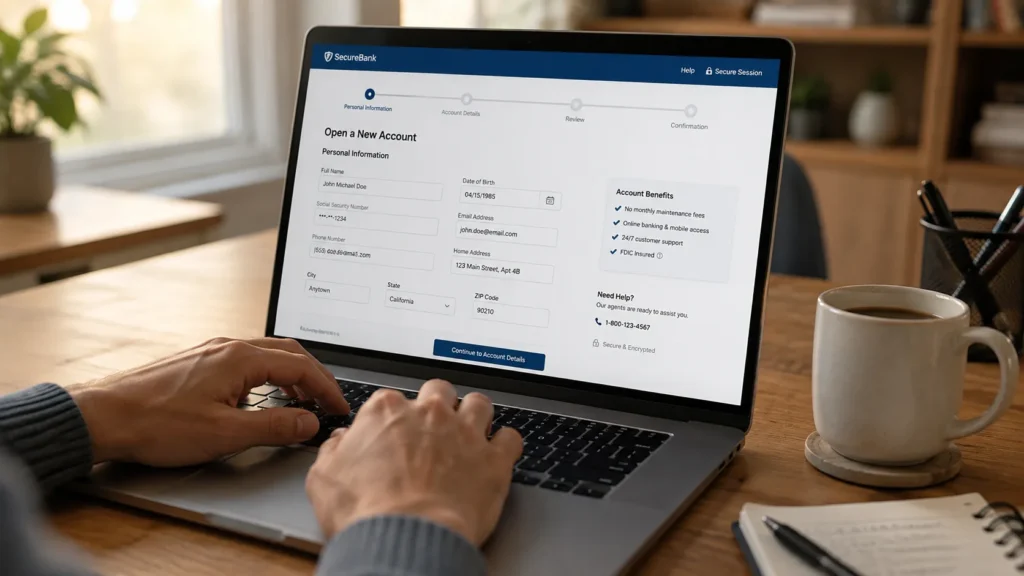
Most people can complete the entire switch in under an hour, and the rate improvement starts working in their favor immediately.
The Bottom Line
Traditional savings accounts at large national banks pay the least interest of any common savings product, usually near 0.01% APY. That rate has stayed flat for years, not because banks can’t afford to pay more, but because most customers never move their money. Checking your current APY and comparing it against high-yield online savings accounts takes a few minutes and can be worth hundreds of dollars a year on a typical emergency fund balance.