
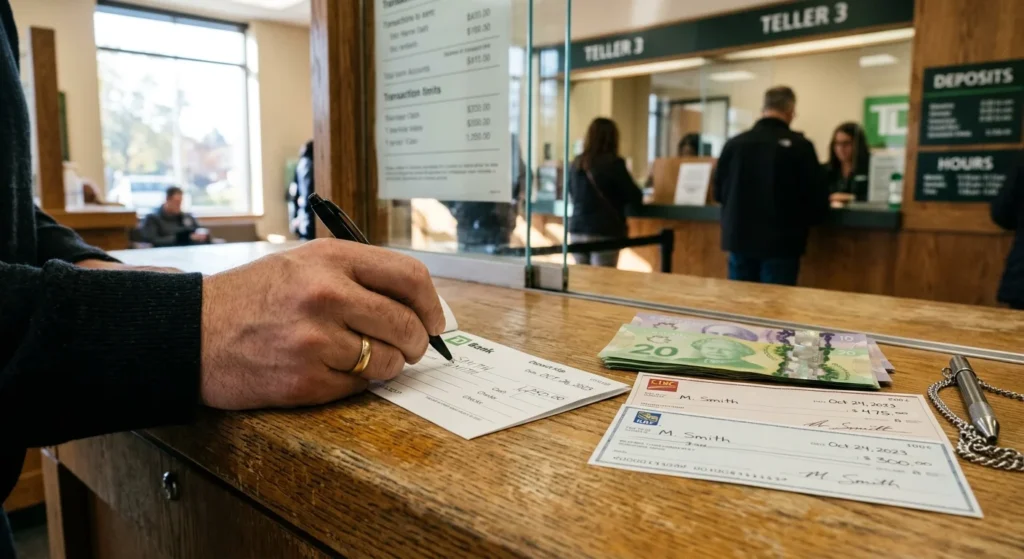
How to Fill Out a Deposit Slip: Simple Guide
A deposit slip tells your bank what you’re putting into your account and how much of it is cash versus checks. Fill in the date, your account number, the cash amount, each check amount, then subtract any cash you want back to get your final total.
What Is a Deposit Slip
A deposit slip is a small paper form banks use to record what you’re adding to your account. It breaks down your deposit into cash and checks, and it gives the teller a written record that matches what they count.
Most banks still keep a stack of blank slips near the counter, and some checkbooks come with a set of pre-printed ones tied to your account number. You can also find blank slips at the ATM or ask a teller for one.
What You Need Before You Start
Grab a pen before you get in line, since many branches don’t leave one at the counter anymore. You’ll also want your account number handy, either from a check, your bank app, or the pre-printed slip from your checkbook.
If you’re depositing checks, endorse each one first. Flip it over, sign your name on the back, and if your bank requires it, write “for deposit only” under your signature.
How to Fill Out a Deposit Slip Step by Step
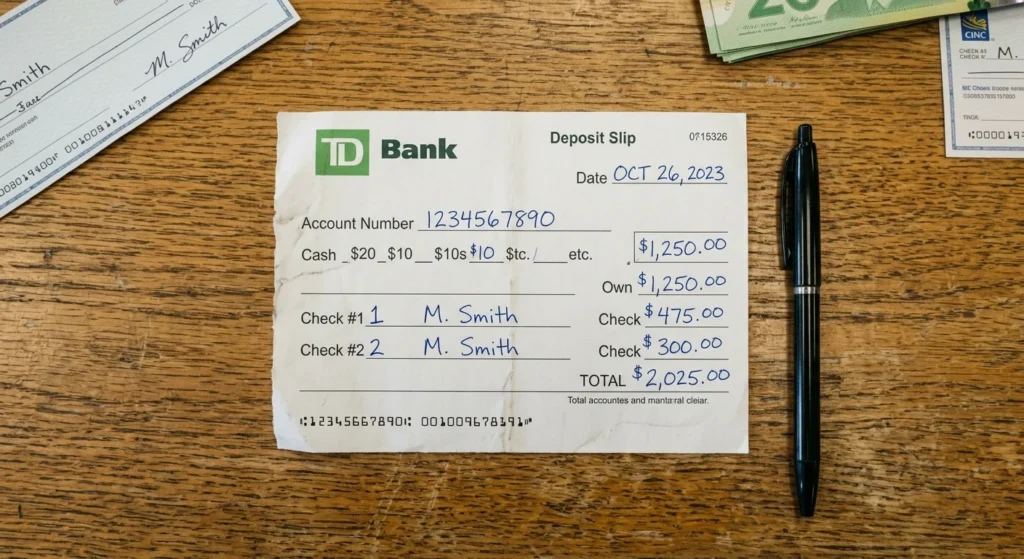
1. Write the Date
Start with today’s date in the top corner. This confirms when the deposit was made and matches the bank’s internal timestamp on the transaction.
2. Add Your Account Information
If the slip isn’t pre-printed with your account number, write it in the field labeled “account number.” Double-check every digit against a check or your online banking app, since one wrong digit sends the funds to the wrong account.
Some slips also ask for your name and address. Fill these in if the fields are blank, since a pre-printed slip usually already has them.
3. Enter the Cash Amount
If you’re depositing cash, write the total dollar amount in the “cash” line. Count your bills once before you write the number and once more before you hand it over, since tellers will recount it and any mismatch slows things down.
4. List Each Check Separately
Most deposit slips have several lines for checks, each asking for the check number and the amount. Write each check on its own line rather than combining them into one total.
If you have more checks than the slip has lines, most banks let you use the back of the slip or a second one. Ask the teller how they’d like you to handle it before you start writing on extra paper.
5. Add Up the Subtotal
Once every cash and check amount is written down, add them together and write the sum in the “subtotal” or “total from other side” line. This step matters even though it feels obvious, since it’s the number the teller checks first against what they physically count.
6. Subtract Any Cash Back
If you want part of the deposit back in cash, most slips have a line for “less cash received.” Write the amount you’re keeping here and sign next to it if the slip requires a signature for cash back.
This step is optional. Skip it if you’re depositing the full amount with nothing returned.
7. Write the Final Total
Subtract any cash back from your subtotal and write the result on the “net deposit” or “total deposit” line. This is the number that actually gets added to your account balance.
8. Sign the Slip if Required
Some banks ask for a signature at the bottom of the slip, particularly if you’re requesting cash back. Sign it the same way you sign your checks, so it matches your account records.
Depositing Cash Versus Checks
Cash deposits go on a single line, so there’s less room for error. Just make sure the number you write matches what you’re physically handing over, since a mismatch means the teller has to recount everything in front of you.
Checks take a little more care. Each one needs its own line on the slip and its own endorsement on the back. If a check bounces after you’ve already spent the funds, your bank can pull the money back out of your account, so it’s worth depositing checks from people or businesses you trust.
Common Mistakes to Avoid
Writing the wrong account number is the most common error, and it’s also the most disruptive, since it can delay the deposit or send funds somewhere they don’t belong. Read the number back from the source document rather than typing it from memory.
Forgetting to endorse a check is a close second. A teller will hand it back to you on the spot, which means redoing part of your slip if the check total changes.
Math errors on the subtotal or final total also cause holdups. Add the numbers twice, or use your phone’s calculator instead of doing it by hand if you’re depositing several checks at once.
Leaving the cash back line blank when you meant to request cash, or filling it in when you meant to deposit the full amount, is another common slip. Read the line labels carefully before writing anything in that section.
What Happens After You Hand It Over
The teller counts your cash, checks the amounts against your slip, and processes the deposit while you watch. You’ll usually get a printed receipt showing the deposit amount and your new balance, or close to it.
Funds don’t always post instantly. Cash deposits usually show up the same business day, while check deposits can take one to several business days to fully clear, depending on the check amount and your bank’s hold policy.
Do You Still Need a Deposit Slip in 2026
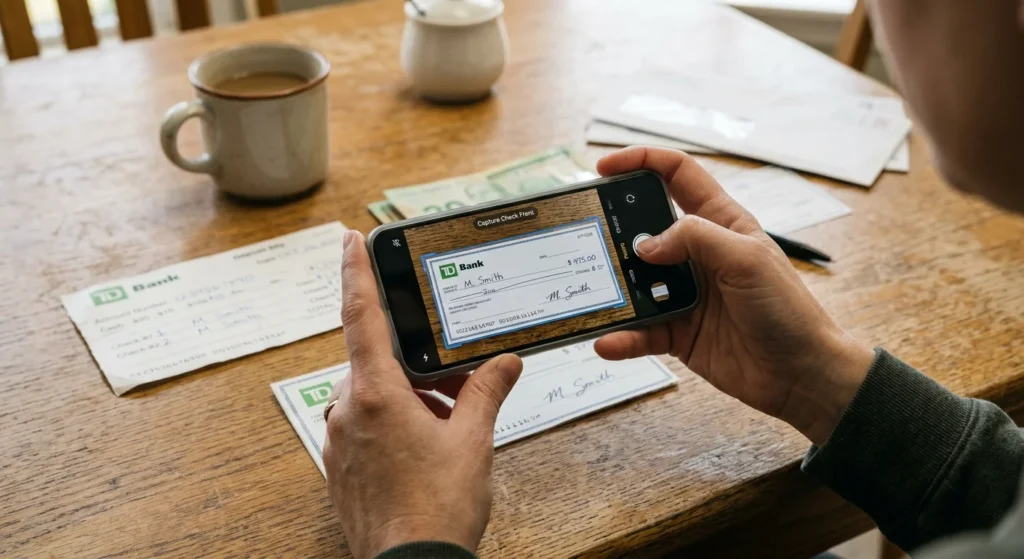
Fewer people use paper slips than a decade ago, mostly because mobile deposit lets you photograph a check from your phone instead. Most major banks in the US still keep the paper process available at branches and ATMs for people who prefer it or who are depositing cash.
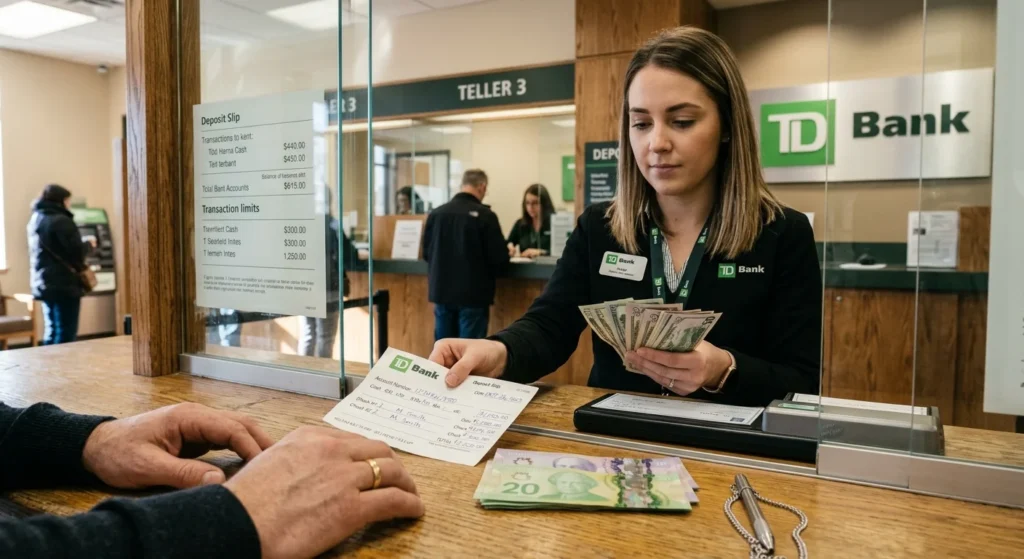
Paper slips are still useful for larger or business deposits, since some banks require one for in-person transactions over a certain amount. If your bank doesn’t strictly require a slip for your deposit, an ATM or the mobile app can usually get the same funds into your account faster. If you’re regularly making business deposits, it also helps to use a dedicated business bank account rather than mixing business and personal funds.
